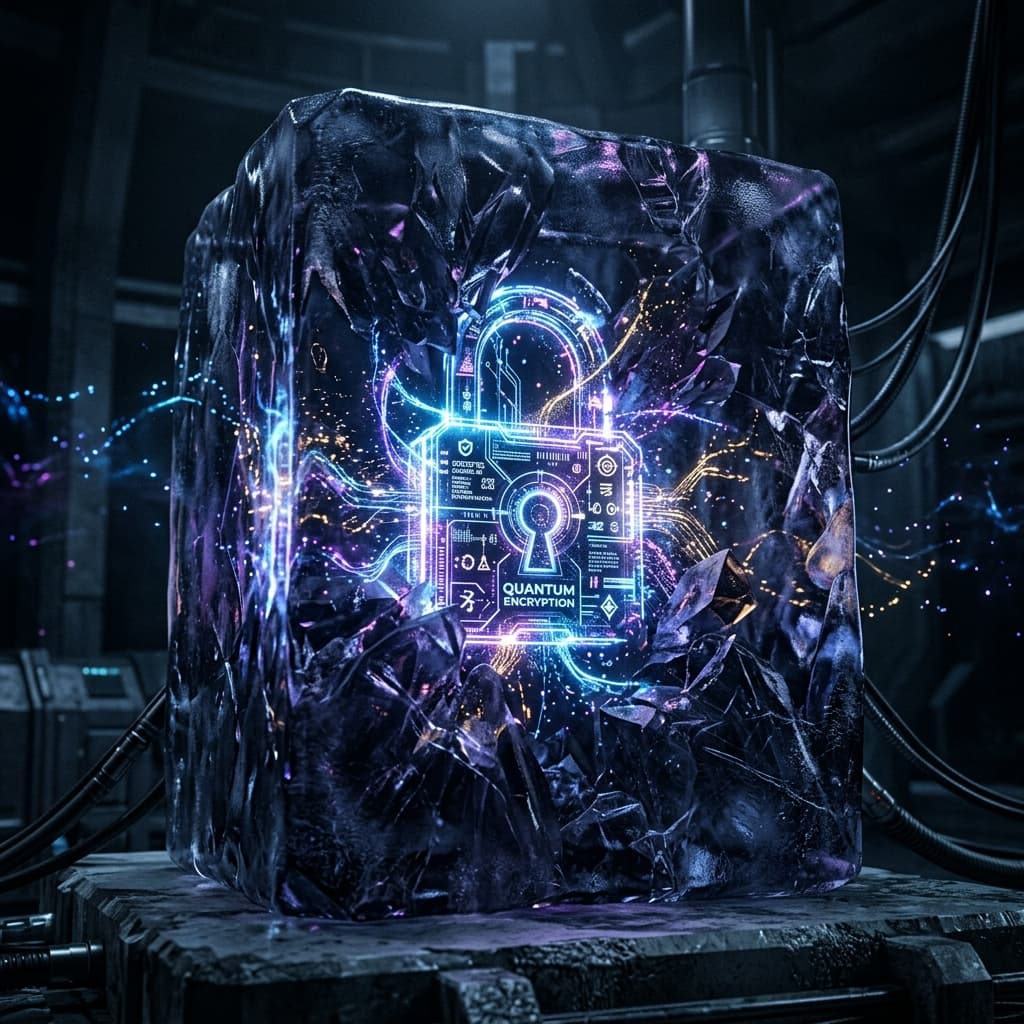
The Ticking Clock
There is a dangerous misconception in the corporate world that the threat of Quantum Computing is a problem for the next decade. Executives read that cryptographically relevant quantum computers (CRQCs) are still years away from breaking RSA-2048 encryption, and they push the budget discussion to 2030.
This logic completely ignores the most insidious cyber-espionage strategy of our time: Harvest Now, Decrypt Later (HNDL).
Segment 1: The HNDL Strategy
Nation-state actors and highly funded syndicates are not waiting for quantum computers to be built to start stealing your data. They are stealing it today.
Right now, attackers are quietly exfiltrating massive troves of highly encrypted data from government contractors, financial institutions, and healthcare providers. They know they cannot read the data today. They simply store it in massive dark-web data lakes.
When quantum computers come online—capable of running Shor's algorithm to shatter current encryption standards in seconds—they will retroactively decrypt everything they harvested over the past decade.
Segment 2: The Impact on Singaporean Enterprises
For an SME selling shoes, a decrypted database in 2032 might not matter. But for the organizations we advise, the impact is existential.
- Financial Institutions: Trade secrets, high-frequency trading algorithms, and M&A strategies.
- Healthcare: Genomic data, long-term patient records, and proprietary pharmaceutical R&D.
- Defense & GovTech: Strategic blueprints, sovereign infrastructure details, and classified communications.
If your proprietary algorithm or trade secret has a "shelf life" longer than 5 years, and it was transmitted over standard TLS encryption today, consider it compromised.
Segment 3: Post-Quantum Cryptography (PQC) Integration
The Monetary Authority of Singapore (MAS) and global regulators are already issuing advisories on crypto-agility. Transitioning an enterprise architecture to quantum-resistant algorithms is not a software update; it is a multi-year infrastructure overhaul.
Our Intelligence division is currently architecting Zero-Knowledge Ledgers and integrating NIST-approved PQC algorithms (like CRYSTALS-Kyber) for our clients. We map their existing cryptographic inventory, identify vulnerable data flows, and implement hybrid encryption models that protect data against both classical and quantum attacks.
Conclusion
The quantum threat is not a future problem; it is a current reality. By the time a quantum computer is publicly announced, the data will already be decrypted. The only defense against HNDL is to ensure that the data you transmit today is protected by the cryptography of tomorrow.